Showing posts with label details details. Show all posts
Wednesday, July 4, 2012
iron root
Some years ago, I attended the funeral of a wonderful old woman who came from the Tidewater Virginia area. It was a hot, summer day, and we drank lemonade, ate cucumber sandwiches and told stories about Nan.
Walking around the old church grounds I spied a beautiful purple flower in the lawn, growing in the grass. The pastor clearly thought I was a bit strange, but readily gave consent to dig one up and armed me with a spoon and a paper cup with which to do so. It was no easy task, but I finally succeeded in getting a plant with a bit of some root to it. I prepped it for travel, and popped it into the ground when I got home. Some days later, it seemed to have disappeared. Oh well. Probably just as well. I had no idea what it was, and was vaguely worried lest it have invasive weed-type qualities. With those wire-like roots, they could cause a problem. I would always remember the day of Nan's funeral, and didn't need the little purple flower to remind me.
The next year, two or three sprigs popped up which I suspected were Nan's flower. I left them in place, even though they did not bloom that year. The year after that, there were considerably more sprigs, with flowers. They were pretty! There was only one problem that I could see, and that was the roots. They are incredibly difficult to dig out of areas they have strayed into, into which you do not wish them to roam. The plant stands a foot tall, and seems to spread by root as well as by seed, as they began to be seen popping up well beyond the reach of the first transplant. I begin to suspect I have a problem.
"Does anyone know what this plant is?" I posted on facebook a week or so ago, with a picture of the plant in question. The picture above, in fact. Almost immediately, a friend posted a possible identity. "Wild Petunia?" she questions.
I hadn't even heard of a wild petunia. But at least I had a place to start my research. "Weed with purple flower" hadn't given me anything. "Wild Petunia," however, turned up immediate pictures that confirmed that my flower was indeed a wild petunia, or Ruellia. As I continued reading, my worst suspicions were confirmed. Although there are Ruellias which are lovely and well-behaved, mine apparently are not.
Note to self: Before you go to all the trouble of digging up and transplanting something you suspect might be weed-like in its growth habit, do some research first. If it has a common name like "iron root," by all means DO NOT PLANT IT.
Next up, the Ruellia relocation program. I think I have just the spot where - if they can survive - they may happily spread out and make themselves at home. I hope they make it. Actually, I hope I succeed in digging their iron roots out of the cucumber patch! I'm sure I will. Anything associated with Nan wouldn't even think of ever making a nuisance of itself.
And I've learned a valuable lesson.
Saturday, June 23, 2012
the state of the garden
I'm a little nervous.
The tomatoes have set fruit, a lot of fruit. Meanwhile, the basil is already trying to blossom - so I'm constantly snipping it, trying to keep it at optimum tenderness and flavor for the tomatoes once they start coming in.
Yesterday, I harvested four (4!) zucchinis. You should see how many tomatoes are on the plants, just biding their time. When they start coming in, it's going to be an avalanche.
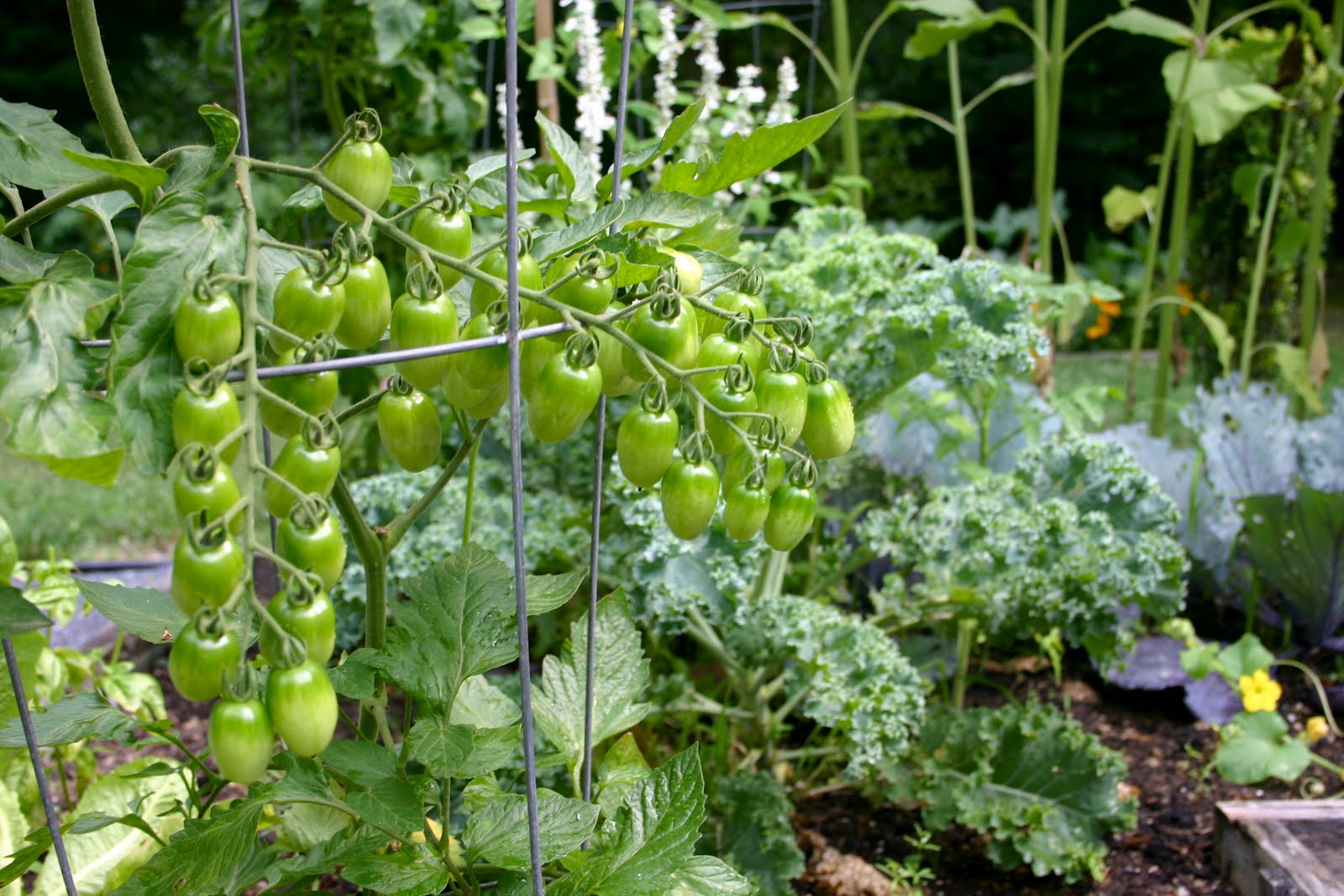
I don't know what it is, but everything is bigger this year. These are "grape" tomatoes in the picture above, but they're almost the size of Romas. The sugar snap peas reached to the top of the centre tee-pee, which they never do. The purple-podded pole beans have already started coming in, overlapping with the sugar snap pea harvest. This, too, is a first. Overnight, purple beans appeared, up to 7 or 8 inches in length! (OK, maybe not overnight, but it seemed like overnight! One day they weren't there, and the next day they were there with a vengeance.)
Here's a picture to prove the point.
Since then, I've harvested about the same amount as in the photograph above, every second day.
I'm looking over my shoulder, expecting disaster, somehow. No sign yet of the dreaded tomato hornworm and, so far, the deer have kept their distance! Nonetheless, I can't shake the feeling that disaster is lurking . . . just around the corner. Sigh.
Well, time to figure out what to do with this basil and these zucchinis.
Wednesday, April 25, 2012
beans
I've learned quite a lot about beans since we've lived here at the greenwood. I started with Thomas Jefferson's hyacinth bean, which turned out to be beautiful, but potentially poisonous. The king objected to its wayward ways, obliterating the front walls with its foliage. He is not moved by blossoms.
I moved on to the more conventional bush bean which, although more restrained in its growth habit, requires prolonged stooping to search out and harvest the beans. Plus, the deer find the bush form much easier to graze the leaves off of. . . . Back to the drawing board.
From Baker Seeds, I ordered Scarlet Runner beans and the Purple Podded Pole bean. The Scarlet Runner bean flowers early and starts producing beans reliably all summer - but I was not a fan of the slightly fuzzy skin. It's not bad, but the purple podded pole beans were beautifully smooth and the purple pods much easier to spot and harvest. Their drawback? They start producing later in the season, but when they start - do they ever start! They produce well into the fall, if you keep harvesting the beans.
Then last year, my globe-trotting parents brought home several packets of beans from various ports they'd called into. I planted several of what I felt certain were bush beans - just to humor them - only to discover that the beans were rampant runners. I erected towers under them and let them climb among the tomatoes. The beans were slow to start, but delicious. They have smooth skin and stay tender well past what I had learned to expect of bean sizes. These were called "Perfect" Judios. Judios apparently means beans! Looking it up now, however, it also apparently means Jews. . . .
I agreed. These were just about perfect beans. Eating-wise, anyway. For this year, I planned to stay with the Perfects and the purple podded pole beans. No Scarlet Runners. Sorry! But then my parents came back with more packets from foreign ports. Oh dear. Here's a close up. Look at those colours! (I have since decided that perhaps the fungicide they put on packeted beans is coloured. . . . surely the lima beans are not fuchsia? We'll see.)
Which brings me to where to put them. . . .
You know those ugly pvc pipe caps builders insist upon putting right next to your house? (and does anyone know what they're good for?!) We did this:
It does get sun part of the day - just not first thing in the morning, the time of this shot. Meanwhile - I've put in some of each type of bean at each trellis.
Should be fun!
I moved on to the more conventional bush bean which, although more restrained in its growth habit, requires prolonged stooping to search out and harvest the beans. Plus, the deer find the bush form much easier to graze the leaves off of. . . . Back to the drawing board.
From Baker Seeds, I ordered Scarlet Runner beans and the Purple Podded Pole bean. The Scarlet Runner bean flowers early and starts producing beans reliably all summer - but I was not a fan of the slightly fuzzy skin. It's not bad, but the purple podded pole beans were beautifully smooth and the purple pods much easier to spot and harvest. Their drawback? They start producing later in the season, but when they start - do they ever start! They produce well into the fall, if you keep harvesting the beans.
Then last year, my globe-trotting parents brought home several packets of beans from various ports they'd called into. I planted several of what I felt certain were bush beans - just to humor them - only to discover that the beans were rampant runners. I erected towers under them and let them climb among the tomatoes. The beans were slow to start, but delicious. They have smooth skin and stay tender well past what I had learned to expect of bean sizes. These were called "Perfect" Judios. Judios apparently means beans! Looking it up now, however, it also apparently means Jews. . . .
I agreed. These were just about perfect beans. Eating-wise, anyway. For this year, I planned to stay with the Perfects and the purple podded pole beans. No Scarlet Runners. Sorry! But then my parents came back with more packets from foreign ports. Oh dear. Here's a close up. Look at those colours! (I have since decided that perhaps the fungicide they put on packeted beans is coloured. . . . surely the lima beans are not fuchsia? We'll see.)
Which brings me to where to put them. . . .
You know those ugly pvc pipe caps builders insist upon putting right next to your house? (and does anyone know what they're good for?!) We did this:
It does get sun part of the day - just not first thing in the morning, the time of this shot. Meanwhile - I've put in some of each type of bean at each trellis.
Should be fun!
Wednesday, February 8, 2012
building and book reports. . . .

Gretchen Rubin is a lawyer who clerked for Supreme Court Justice Sandra Day O'Connor, but gave up the full-time practice of law to write books. She's written several,
A lawyer myself, and a writer, and one who has also studied Aristotle in the quest of understanding more about what's important and what makes us happy, generally, I feel a bit of a kinship with Gretchen. Accordingly, I was quite interested when she listed Christopher Alexander's A Pattern Language
Paradigm shifts are energizing, don't you think? Picture standing on your desk, like the students in Dead Poet's Society - the view really is different! It can jumpstart thought, or give a flash of inspiration. To an artist or a writer - or anyone, really - it is a good thing. This was a book I wanted to read.
It turns out that The Timeless Way of Building
The book consists really of a single idea: that there are inherent 'patterns' in the way we live as humans, patterns which ought to (but often don't) shape the buildings, towns and cities we live in.
That's the book, in a nutshell. Alexander argues at length that we have lost our connection with those basic patterns, and that the current state of architecture and design is bankrupt. This is why, he argues, many of the spaces we inhabit are 'dead'. Dead spaces, he says, are deadening also to our lives. The converse is also true: that 'living' spaces inject life and freedom back into us. The trick is to become aware of the patterns which are "life-giving" and to re-incorporate them into our living spaces. But it's not just incorporating patterns that is important, it's about learning who we are, when we are least aware of ourselves. He does not advocate a slavish adoption of rules and patterns, he attempts to translate living patterns into language, which we can use in dwelling spaces much as we use words strung together as sentences. Ultimately, he says we transcend even the patterns, and that's well and good.
"The more I watch our pattern language being used, the more I realize that the language does not teach people new facts about their environment. It awakens old feelings. It gives people permission to do what they have always known they wanted to do, but have shunned, in recent years, because they have been frightened and ashamed by architects who tell them that it is not "modern." . . . The impulse to make windows overlooking life, to make ceilings vary in height, columns thick enough to lean against, small window panes, sheltering steeply sloping roofs, arcades, seats by the front door, bay windows, alcoves, [and hidden gardens] is already part of you. But you have been told so much, that you no longer value these inner impulses. You curb them, because you think that someone else knows better [or] that people may laugh at you for being so ordinary. A pattern language does nothing really, except to wake these feelings once again." [pp. 545-47]
The writing often feels redundant, and good examples are few. There are wonderful pictures of 'living' spaces, which the author fails to comment upon, happy to let the (often poor-quality) picture speak for itself. The pictures do speak for themselves, but I would have loved to have had the author's commentary about details, and help to see it even better. The value of this book is that the main idea is just so good. The drawback is that he spends more of his time trying to get us to agree with his main idea than showing us how it works, once we're on board with it. It's likely that the drawbacks I've listed here are remedied in the next book. Note, too, that this was published in 1979, and there are aspects that feel dated.
Gretchen Rubin is right: it will change how you look at things. I expect that I will spend years perfecting my understanding of the "patterns" that delight me, and which we incorporate into our lives and the spaces we inhabit. I wish I had known more about these patterns when we were designing and building here at the greenwood. . . . Especially about "window places" and "windows opening wide" and "sheltering roofs".
As it is, we have a good amount of roof overhang - every inch of which was hard-fought from first our draftsman and then our builder. I would have fought harder for certain doors to open outward. ("That's just not how it is done." I was told, and stupidly, I let it drop.) I would have brought certain window sills further down to floor level and incorporated a deeper sill. There, as I recall, I was told that the building code prohibited windows from extending too far down to floor level without. . . . whatever it was. We won the battle of the 'small window panes' - but were first subjected to comments like "But everyone agrees that picture frame windows are better than cutting up the view with lots of divided panes! You really want divided lights windows? You'll regret it. . . . ." I would have felt ever so much more secure if I had known of this "pattern" and how it makes people feel comfortable to dwell there. I could have withstood the criticism and implied ridicule ever so much easier. As it is, I feel somewhat vindicated now, especially as I also see the thickened walls, varying ceiling heights, steeply sloping roofs, the arcade, columns thick enough to lean against, and the seats at the front entrance. . . . Elements we included without having named them; elements we were made to feel vaguely ashamed of, for even wanting. It was not a matter of luxury, but a matter of feel. "Feel" is apparently not an element that is highly valued in the building trade.

For anyone wishing to understand a bit better how we inhabit the spaces we inhabit - and how we can better inhabit them - this is a great place to start. I think I'll have to bite the bullet and purchase the next one as well - A Pattern Language
- the one that details the 200 plus patterns Alexander identifies as significant in our gardens, buildings, towns and cities.
I'll report back once I've made my way through that one. Meanwhile, The Timeless Way of Building
Wednesday, February 1, 2012
Spring?
Surely it's not spring yet. It's just the first of February! But the blackbirds have started their spring ritual of flocking and turning the leaves over in the forest.
It's birthday season here at the Greenwood. There are an amazing number of women in this family who are born in the first week of February. And this week we're also gathering for a baby shower to welcome a new baby girl who will miss out on the February festivities - but who will be extending the birthday bashes into March.
Yes, I've been knitting.
My friend Sarah - who used to publish conservative commentary here has had her time largely taken up by her girl toddler and keeping her in hats and other adorable knitted things. Which I now know from facebook and not her blog. Most recently, she's been adorning barrettes with crocheted posies and caterpillars. (again - facebook. Sorry! But here, I'll give you a peek at the caterpillars.)
With that inspiration, I tried my hand at a flower to spice up this little knitted cloche and bunting bag I made for the new baby expected in our extended family. . . .
Is this cute, or what?!
Pattern: cast on 7 sts. Slipping first stitch of each row:
Row 1: Knit
Row 2: Knit
Row 3: Purl
Row 4: Slip one st k-wise, *yo K1* and repeat across the row - 14 sts.
Work in Stockinette stitch for 8 more rows, finishing with a purl row.
1st dec. row: SSK, SSK, knit across until there are 4 stitches left then K2tog twice
2nd dec. row: purl across
3rd dec. row: SSK, SSK, knit across until there are 4 stitches left then K2tog twice.
4th dec. row: purl
5th dec. row: SSK, knit 1, then K2tog
6th dec. row: purl
7th dec. row: SSK, return stitch to left needle and pass last stitch over it; fasten off.
I made 5 petals - you can make as many as you like. When you're done, you sew them together - cinching them tight in the middle. I used narrow ribbon to make french knot and running stitch details.
Have at it!
It's birthday season here at the Greenwood. There are an amazing number of women in this family who are born in the first week of February. And this week we're also gathering for a baby shower to welcome a new baby girl who will miss out on the February festivities - but who will be extending the birthday bashes into March.
Yes, I've been knitting.
My friend Sarah - who used to publish conservative commentary here has had her time largely taken up by her girl toddler and keeping her in hats and other adorable knitted things. Which I now know from facebook and not her blog. Most recently, she's been adorning barrettes with crocheted posies and caterpillars. (again - facebook. Sorry! But here, I'll give you a peek at the caterpillars.)

With that inspiration, I tried my hand at a flower to spice up this little knitted cloche and bunting bag I made for the new baby expected in our extended family. . . .
Is this cute, or what?!
Row 1: Knit
Row 2: Knit
Row 3: Purl
Row 4: Slip one st k-wise, *yo K1* and repeat across the row - 14 sts.
Work in Stockinette stitch for 8 more rows, finishing with a purl row.
1st dec. row: SSK, SSK, knit across until there are 4 stitches left then K2tog twice
2nd dec. row: purl across
3rd dec. row: SSK, SSK, knit across until there are 4 stitches left then K2tog twice.
4th dec. row: purl
5th dec. row: SSK, knit 1, then K2tog
6th dec. row: purl
7th dec. row: SSK, return stitch to left needle and pass last stitch over it; fasten off.
I made 5 petals - you can make as many as you like. When you're done, you sew them together - cinching them tight in the middle. I used narrow ribbon to make french knot and running stitch details.
Have at it!
Wednesday, November 30, 2011
counting the days. . . .
I am amazed at how fast Christmas comes each year. Apparently faster and faster, with every passing year! But I know that this is just a common place illustration of the relativity equation. With only one Christmas season under my belt, the next one took forever to arrive. With 50-plus under my belt, they're a bit more commonplace these days. . . .
I like this season. I like it perhaps better than any other season because it brings magic and wonder back into our lives as possibilities.
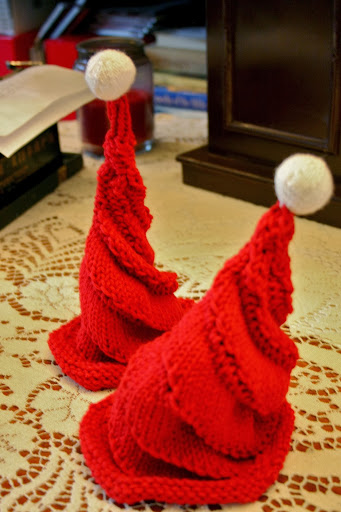
In that frame of mind, I present to you this year's act of whimsy: the Christmas elf hat.
I used Lion Brand Cotton Ease - and (giving due credit to Elizabeth Zimmerman
HERE'S THE PATTERN:
Spirello, the Elf Hat. . . .
With size 8 double-pointed needles cast on 65 stitches and distribute amongst your needles. join and knit 5 rounds for roll-up brim.
Begin spiral pattern as follows:
Row 1: *K 10, M1 (which means= make one stitch using backward loop method), P 1, P2 tog - repeat from *.
Repeat that row 15 to 20 times - or until you wish to start decreasing. Here, suit yourself as to how fast to decrease. The fastest decrease is simply to omit the "M1" in Row 1. What I did was to start a bit slower, omitting the M1 in one Row 1, then working 4 or 5 pattern rows before again knitting a Row 1 without the M1.
Things get a bit complicated when the knit sections get down to 2 stitches and below. . . . You can either keep it to a K2, P2 tube, or continue a spiral by working K, Kf&b, P, P2tog. Decrease further as you think best - I did: K2tog, P2tog - and worked in K1, P1 ribbing for a bit before cutting the yarn and running the end through the remaining stitches and pulling tight.
I worked the ball in sock yarn, using #1 dp needles, and this pattern HERE, posted by "Em-En" at I Like Lemons.
I only increased to the K4, Kf&b stage - then knit 3 rounds - and then decreased starting with K4, K2tog. I stuffed the ball with fiberfill before the opening got too small, and then knit the remaining rows and fastened off. I also picked up the stitches directly on the hat, rather than casting on separately and then sewing the pom-pom on. . . .
I like that they will stand on their own:

And for those interested in EZ's Snail hat, you can find it in her book Knitting Without Tears - which is a game-changer for most people who knit and who've read it. . . .
Labels:
details details,
elf,
hat,
in the making,
patterns,
spirello
Tuesday, February 1, 2011
hot and cold
One of our favorite family jokes is the one of the simpleton who, when asked to name the most amazing human invention, intoned: "The thermos."
"The thermos?!!!
"Yeah! The thermos. You put hot things in it and it keeps it hot; you put cold things in and it keeps it cold. How do it know?!"
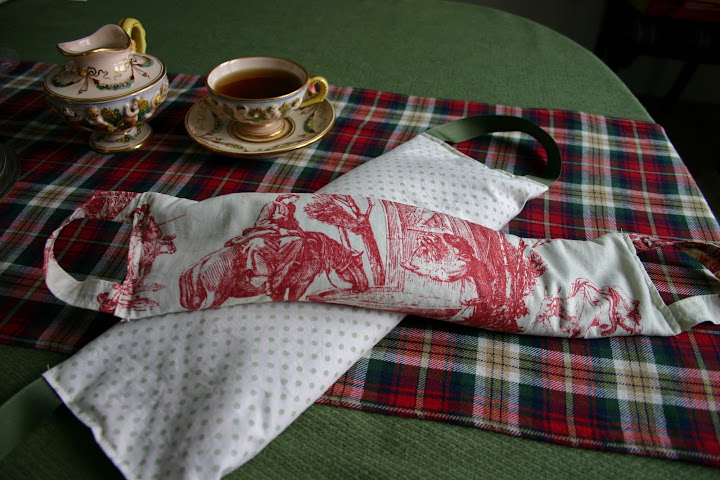
Well, here is my new amazing hot/cold pack. It's perhaps not quite as amazing as the thermos, but it's pretty amazing for all that. Microwave it for a minute and it provides beautiful heat for almost an hour to soothe sore and aching muscles. Freeze it, and it's an ice pack (minus the hard cubes and moisture of the melting ice) - to soothe sore and aching muscles!
Yes, there are two of them. Although each pack can be used for both hot and cold applications, from a practical perspective, it takes a good deal longer to freeze one of these than it does to microwave it. My current regimen is ten minutes of heat and then 20 minutes of torturous physical therapy followed by ten more minutes of icing. Frozen shoulders apparently need both heat and ice. Anyway, it didn't take me long to figure out that I'd have to have one of these hot/cold packs dedicated to the cold side of things. So I made two.
This is SO much better than a heating pad. They're stuffed with flax seeds, which conform to your body and have a bit of weight to them, so they can easily transfer either heat or cold without you having to press down on the pack to keep it in contact with your skin. But 'how do it know'? Apparently flax seeds have a high concentration of oil in them, and it is the oil that retains either heat or cold, whatever you subject it to. Plus, heating pads are stiff, electrical, and prone to mustiness. Don't even talk to me about ice or frozen pea packs. They are lumpy, wet, hard-frozen, and uncomfortable - and also prone to freezer-must. I find the light aroma of the heated flax seeds very enjoyable and I have been advised to put the cold pack in a ziplock bag, to avoid picking up that stale freezer smell! You take the the pack out of the ziplock when you're ready to use it, as it remains perfectly dry.
These heat/cold packs have really picked up my spirits! It's amazing what a little thing like this can do. Flax seeds. Who would have thought it? I'm actually kind of looking forward to my next range-of-motion torture session. Or at least to the temperature therapy aspects of it. . . .
"The thermos?!!!
"Yeah! The thermos. You put hot things in it and it keeps it hot; you put cold things in and it keeps it cold. How do it know?!"
Yes, there are two of them. Although each pack can be used for both hot and cold applications, from a practical perspective, it takes a good deal longer to freeze one of these than it does to microwave it. My current regimen is ten minutes of heat and then 20 minutes of torturous physical therapy followed by ten more minutes of icing. Frozen shoulders apparently need both heat and ice. Anyway, it didn't take me long to figure out that I'd have to have one of these hot/cold packs dedicated to the cold side of things. So I made two.
This is SO much better than a heating pad. They're stuffed with flax seeds, which conform to your body and have a bit of weight to them, so they can easily transfer either heat or cold without you having to press down on the pack to keep it in contact with your skin. But 'how do it know'? Apparently flax seeds have a high concentration of oil in them, and it is the oil that retains either heat or cold, whatever you subject it to. Plus, heating pads are stiff, electrical, and prone to mustiness. Don't even talk to me about ice or frozen pea packs. They are lumpy, wet, hard-frozen, and uncomfortable - and also prone to freezer-must. I find the light aroma of the heated flax seeds very enjoyable and I have been advised to put the cold pack in a ziplock bag, to avoid picking up that stale freezer smell! You take the the pack out of the ziplock when you're ready to use it, as it remains perfectly dry.
These heat/cold packs have really picked up my spirits! It's amazing what a little thing like this can do. Flax seeds. Who would have thought it? I'm actually kind of looking forward to my next range-of-motion torture session. Or at least to the temperature therapy aspects of it. . . .
Thursday, January 20, 2011
Wednesday, December 8, 2010
the purge
. . . . in which the queen-mum attempts to poison her offspring.

The queen-mum and her consort have recently returned from their annual world cruise. As is their wont, they return with little treats from the local markets. Spices, condiments and coffees are popular acquisitions and this trip was no exception.
The bottles of Madeira were broken by their bearers (so the entire travel party smelled strongly of the inside of a tavern when they emerged to be picked up), but the seeds and coffee packets survived, as did the black T-shirt with "Barcelona" spelled out in rhinestones. We opened the coffee today.
OK - the king opened the coffee. He's the one entrusted with the secret greenwood coffee recipe! It's a blend, and usually involves a scoop or two of 'foreign' coffee, for colour and flavor.
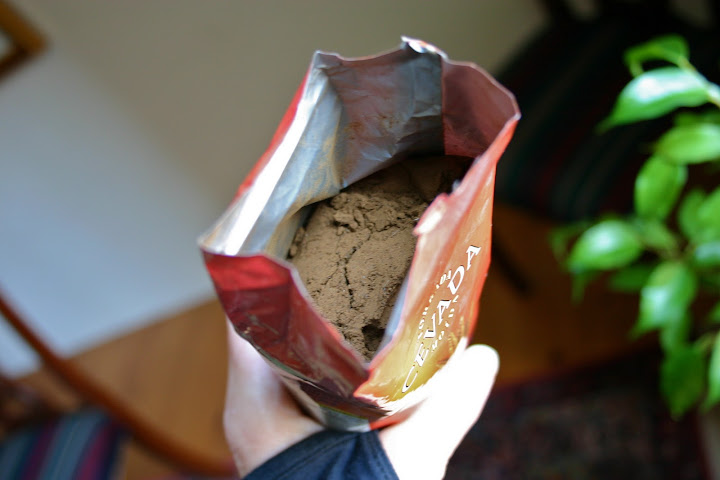
As he reported: strange colour. . . . Acrid odor.
Flavor? Ah. . . . well. . . .
"Is this coffee?!!"
No ingredients listed.
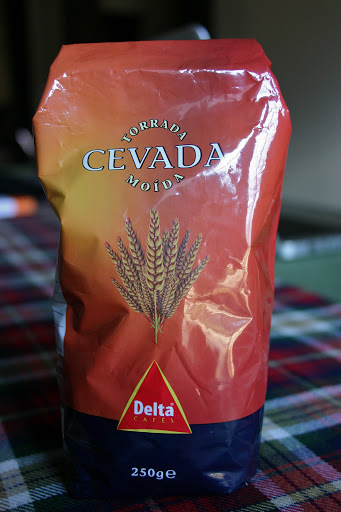
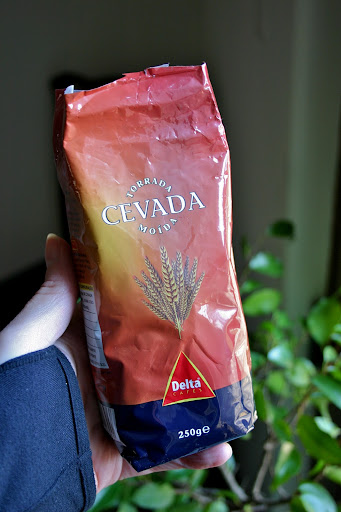
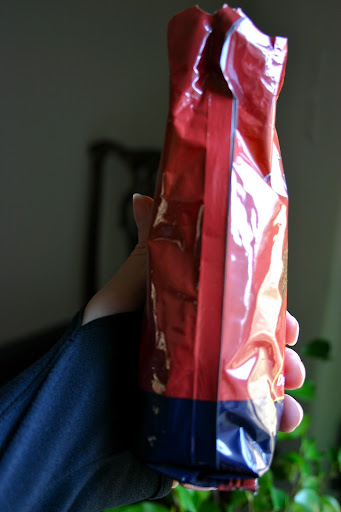
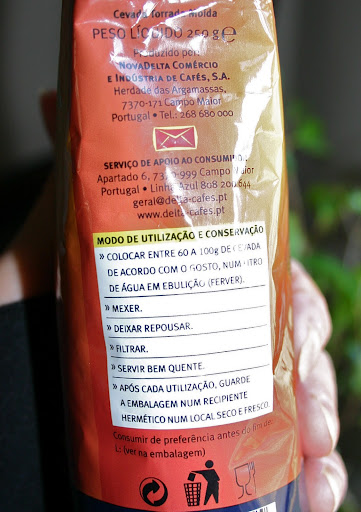
"Hmmmm. There's a picture of some sort of grain on the front. It says Delta Cafes, but why would you illustrate coffee with a picture of grain?"
"I thought it was feathers. . . ."
" 'Cevada - Torrada Moida'. . . . What if that's not the brand name?! Wonder what Cevada means?"
As a word, Cevada is not exactly intuitive. Coffee is coffee, kaffee, cafe; pasta is pasta; and wine is wein, vin, vino. . . . but Cevada? I typed it into a Google search and hit "translate this page".
"Great. We're drinking roasted barley, known for it's purgative and laxative qualities. . . ."
That queen-mum!
Wonder who else got "coffee" from the world cruise? Should we tell them, do you think? [grin]
I guess you could put it on top of your cereal - because it sure ruins a good cuppa coffee!
Note the universal "throw this out" symbol next to the recycle one. . . .
Yep. I'm thinking compost.
We'll be roasting her for years over this one. . . . It's almost as good as the basil/pepper mix-up! Live and learn. This was fun. Thanks, Maman. I love you!

The queen-mum and her consort have recently returned from their annual world cruise. As is their wont, they return with little treats from the local markets. Spices, condiments and coffees are popular acquisitions and this trip was no exception.
The bottles of Madeira were broken by their bearers (so the entire travel party smelled strongly of the inside of a tavern when they emerged to be picked up), but the seeds and coffee packets survived, as did the black T-shirt with "Barcelona" spelled out in rhinestones. We opened the coffee today.
OK - the king opened the coffee. He's the one entrusted with the secret greenwood coffee recipe! It's a blend, and usually involves a scoop or two of 'foreign' coffee, for colour and flavor.
As he reported: strange colour. . . . Acrid odor.
Flavor? Ah. . . . well. . . .
"Is this coffee?!!"
No ingredients listed.
"Hmmmm. There's a picture of some sort of grain on the front. It says Delta Cafes, but why would you illustrate coffee with a picture of grain?"
"I thought it was feathers. . . ."
" 'Cevada - Torrada Moida'. . . . What if that's not the brand name?! Wonder what Cevada means?" As a word, Cevada is not exactly intuitive. Coffee is coffee, kaffee, cafe; pasta is pasta; and wine is wein, vin, vino. . . . but Cevada? I typed it into a Google search and hit "translate this page".
"Great. We're drinking roasted barley, known for it's purgative and laxative qualities. . . ."
That queen-mum!
Wonder who else got "coffee" from the world cruise? Should we tell them, do you think? [grin]

I guess you could put it on top of your cereal - because it sure ruins a good cuppa coffee!
Note the universal "throw this out" symbol next to the recycle one. . . .
Yep. I'm thinking compost.
We'll be roasting her for years over this one. . . . It's almost as good as the basil/pepper mix-up! Live and learn. This was fun. Thanks, Maman. I love you!
Thursday, September 23, 2010
yellow on yellow
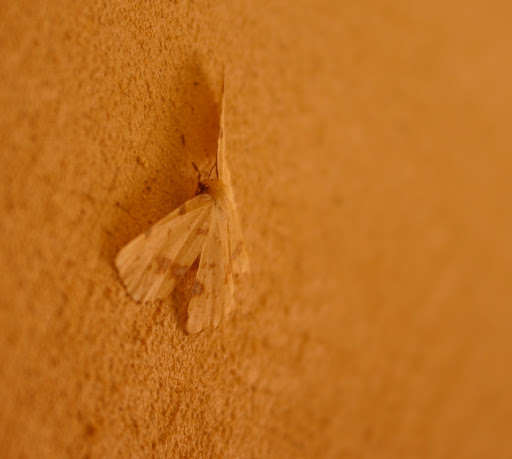
OK. Look. If I had painted this guy, would I have been able to get him the same colour all the way around? Including getting him to hold still long enough to daube on the camouflage spots and get full coverage around the legs and antennae? He'd be a dead bug by then, and this guy is clearly not.
Now what sort of bug he is, is anybody's guess. I'm just glad he moved in. Glad, so long as he stays outside! No moths allowed in, to ravage wool socks and sweaters. And that is final. I don't care what colour you are.
Speaking of colour, that's really more of a saffron now, wouldn't you say? Yellow is so generic. . . .
P.S. - thanks to alert reader Tiffany, we now know this is a Crocus Geometer. Thanks to the MagickCanoe, we learn that there are Crocus Geometers and FALSE Crocus Geometers. Who knew?!
Thursday, July 15, 2010
onslaught
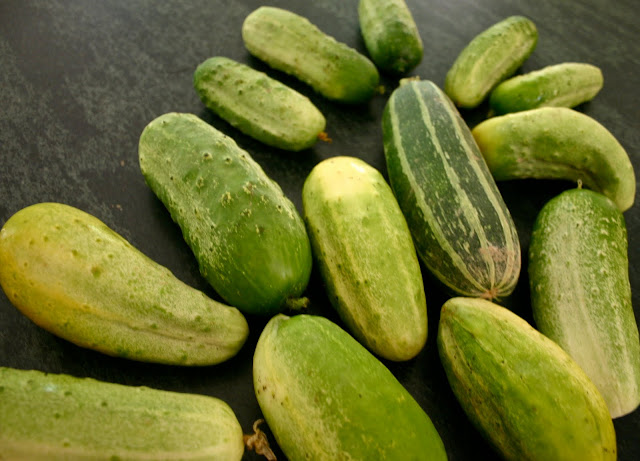
I cannot keep up with the cucumbers.
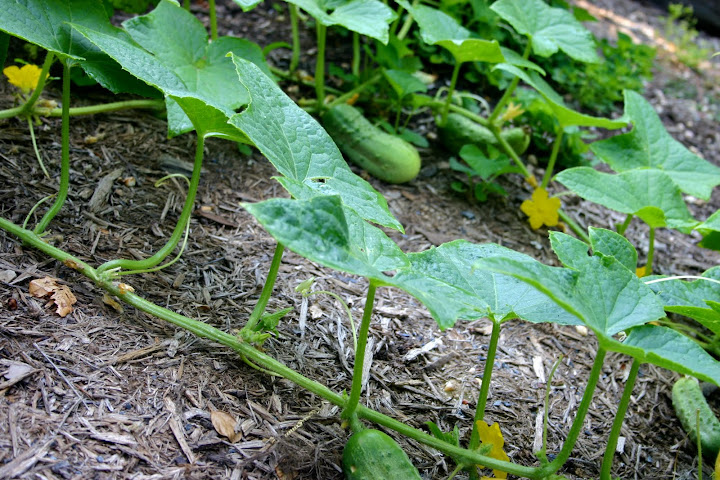
Every time I turn around, there's four more. And every yellow flower is potentially yet another one!
Here's what happens over the course of a few days. 
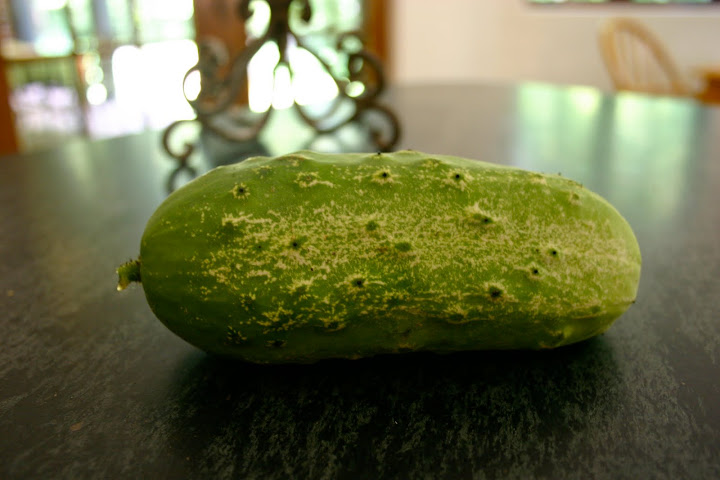
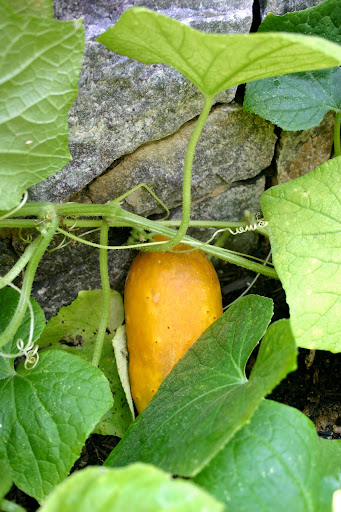
Here (below) is what happens if you miss one! I've decided to leave this one on the vine to see just how big it will get - as well as what colour it ends up. I've never seen the likes of this before. A yellow cucumber!
Oh, and did you know that cucumbers on the vine are rather prickly?! I'm thinking that's why the deer won't touch them. . . .
Well, I'm off to find a pickle recipe. Any suggestions? I'm thinking that's the only way to deal with this onslaught.
Note to self: one cucumber plant (given enough bees) is more than enough to keep us in cucumbers!
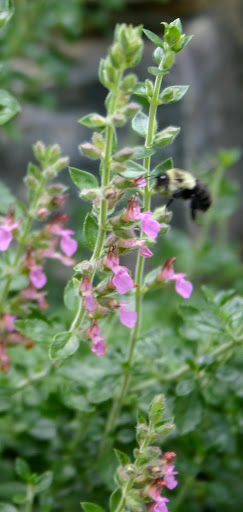
Further note to self: plant more germander [pictured left]. It attracts more bees than any other plant in the garden, and the germander/cucumber corner is veritably abuzz with our pollinating friends! Not so the cucumber plants on the other side of the garden (for which I am grateful) as well as the melons (for which I am not). I think we need more bees on that side of the yard. As I have declared war on the deer, however, I suspect Luther has declared war on the giant bumblers. . . . It's a problem.
Yes, I know that there's a zucchini crouched amidst the cucumbers. Can you spot him? Yoo hoo! Queen Muh-hum! Time to come fetch your proh-dooce! [grin]
Here (below) is what happens if you miss one! I've decided to leave this one on the vine to see just how big it will get - as well as what colour it ends up. I've never seen the likes of this before. A yellow cucumber!
Oh, and did you know that cucumbers on the vine are rather prickly?! I'm thinking that's why the deer won't touch them. . . .Note to self: one cucumber plant (given enough bees) is more than enough to keep us in cucumbers!
Further note to self: plant more germander [pictured left]. It attracts more bees than any other plant in the garden, and the germander/cucumber corner is veritably abuzz with our pollinating friends! Not so the cucumber plants on the other side of the garden (for which I am grateful) as well as the melons (for which I am not). I think we need more bees on that side of the yard. As I have declared war on the deer, however, I suspect Luther has declared war on the giant bumblers. . . . It's a problem.
Yes, I know that there's a zucchini crouched amidst the cucumbers. Can you spot him? Yoo hoo! Queen Muh-hum! Time to come fetch your proh-dooce! [grin]
Friday, February 26, 2010
knitting with scissors
I'm tired of the snow. Tired of thinking about the weather. Tired of white - dingy white - swirling white - and cold heavy wet white everywhere.
This is why I have not posted anything here for some time. I seem to have a compulsion to document the weather! I am tired of that. But it was either that, or getting into trouble for posting inside pictures with people's faces in it. . . .
Now this post has no pictures of people's faces. None.
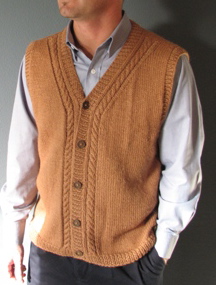
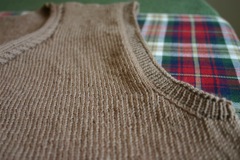
You remember this vest, don't you?
I wrote about it here. When I was done, it looked like this:
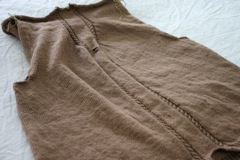
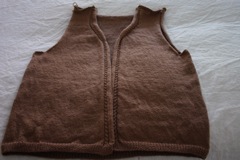
Note the lack of the opening at the front, as well as here, at the armholes. (Which may be expected to make the wearing of it a bit of a challenge. . . .)
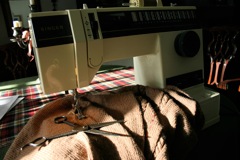
This is where the scissors come in. First, though, a sewing machine, another device one wouldn't think of when thinking of knitting.
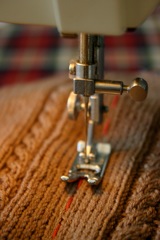
One has to secure the knitting before cutting! Don't be tempted to do either the crochet or hand-sewing alternatives - I was - the sewing machine works great and is the easiest and neatest way of doing this.
Watch now:
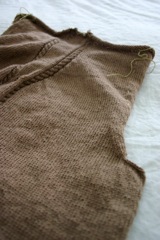
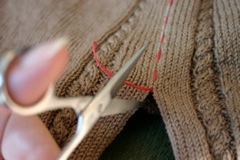
Get as close as you can to the center line you will cut along - marked here by red thread. Yes, you will need to mark it, especially when you're working with a really fine gauge, like this is. And second, you might re-think the colour of the marking thread - it looks a little too much like it's bleeding when you cut along red. . . .
Now, for the cutting. Take a deep breath. Now cut.
I felt a sense of euphoria afterwards, and did not need to lie down in a dark room for a half hour to recover as Elizabeth Zimmerman recommended, first time 'round, with, or without the stiff drink she also recommended.
I believe I did partake in a libation of some sort, however, as I finally got to see the vest looking rather more like a vest.
I've finished the armhole ribbing, but now I have to re-do the bottom ribbing using a smaller needle and as soon as I've decided on a button size, I can decide on how many buttons there will be, and knit the front facing ribbing.
Speaking of ribbing, here is the best method for an elastic cast off method for ribbing I have ever found. Look how pretty. . . .
And speaking of buttons, here is a website with one of the more comprehensive button collections I was able to find. I thought I'd find a wealth of available choices - but I was a bit surprised and looked long and hard to find this one. Any others out there you'd recommend?
This is why I have not posted anything here for some time. I seem to have a compulsion to document the weather! I am tired of that. But it was either that, or getting into trouble for posting inside pictures with people's faces in it. . . .
Now this post has no pictures of people's faces. None.
You remember this vest, don't you?
Note the lack of the opening at the front, as well as here, at the armholes. (Which may be expected to make the wearing of it a bit of a challenge. . . .)
This is where the scissors come in. First, though, a sewing machine, another device one wouldn't think of when thinking of knitting.
One has to secure the knitting before cutting! Don't be tempted to do either the crochet or hand-sewing alternatives - I was - the sewing machine works great and is the easiest and neatest way of doing this.Watch now:
Get as close as you can to the center line you will cut along - marked here by red thread. Yes, you will need to mark it, especially when you're working with a really fine gauge, like this is. And second, you might re-think the colour of the marking thread - it looks a little too much like it's bleeding when you cut along red. . . . Now, for the cutting. Take a deep breath. Now cut.
I felt a sense of euphoria afterwards, and did not need to lie down in a dark room for a half hour to recover as Elizabeth Zimmerman recommended, first time 'round, with, or without the stiff drink she also recommended.I believe I did partake in a libation of some sort, however, as I finally got to see the vest looking rather more like a vest.
I've finished the armhole ribbing, but now I have to re-do the bottom ribbing using a smaller needle and as soon as I've decided on a button size, I can decide on how many buttons there will be, and knit the front facing ribbing. Speaking of ribbing, here is the best method for an elastic cast off method for ribbing I have ever found. Look how pretty. . . .
And speaking of buttons, here is a website with one of the more comprehensive button collections I was able to find. I thought I'd find a wealth of available choices - but I was a bit surprised and looked long and hard to find this one. Any others out there you'd recommend?
Subscribe to:
Posts (Atom)